
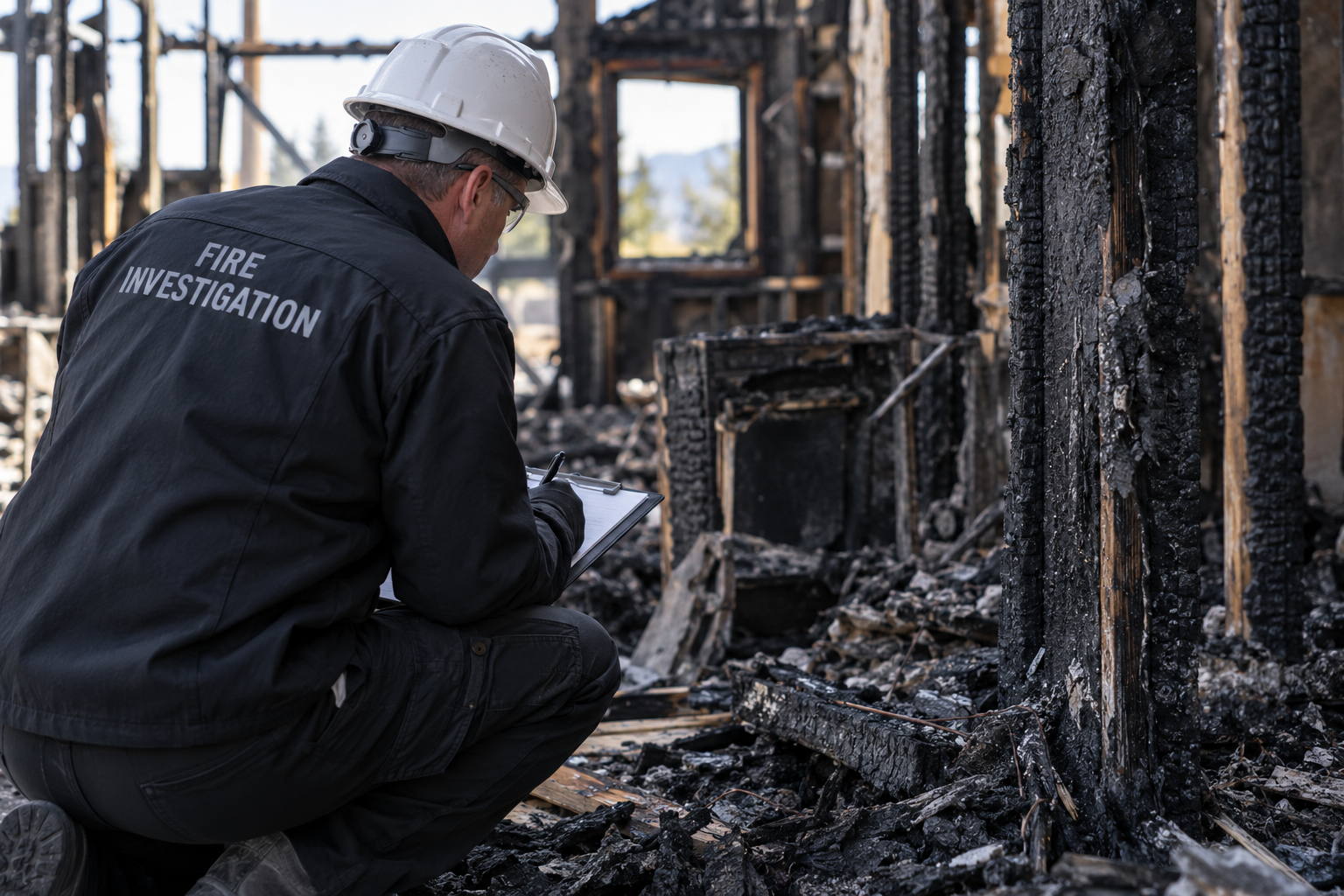
After a fire, one of the most important questions is often: Where did the fire start, and what caused it?
Answering those questions requires more than simply looking at the most heavily damaged area. A professional fire origin and cause investigation is a systematic process that considers the fire scene, physical evidence, potential ignition sources, witness information, and other available evidence.
For insurers, legal professionals, property owners, and organizations dealing with a significant fire loss, understanding this process can help clarify what an investigation involves and why careful documentation matters.
What Is a Fire Origin and Cause Investigation?
A fire origin and cause investigation is a structured examination intended to determine where a fire originated and to evaluate the available evidence to identify its cause.
The process begins at the fire scene and can involve several forms of evidence and information gathering. Investigators assess the scene, document conditions, preserve relevant evidence, examine physical materials, consider potential ignition sources, and gather information from people who may have knowledge of the incident, all to develop evidence-based technical findings rather than rely on assumptions about how the fire started.
For a broader overview of Clearwater’s services →
Step 1: Assessing the Fire Scene
he investigation begins with a careful assessment of the fire scene. The investigator considers the overall condition of the property or affected area, patterns of damage, areas of greater or lesser fire involvement, and other physical conditions that may help establish where the fire originated.
This stage is important because the most visibly damaged area is not necessarily the point of origin. Fire behaviour, building construction, available fuel, ventilation, and other conditions can affect how damage develops and how evidence is distributed throughout a scene.
Depending on the type of incident, the investigation may also involve specialized approaches. For example, a structural fire investigation may require consideration of building construction and damage throughout the structure.
Step 2: Preserving and Documenting Evidence
Once the scene has been assessed, relevant evidence must be identified and documented carefully. This can include photographs, observations, physical evidence, damaged components, potential ignition sources, and other material that may help explain the sequence of events.
Evidence preservation is an important part of a professional investigation because the condition of the scene can change as debris is moved, damaged materials are removed, or cleanup and repair activities begin. For that reason, evidence preservation should be considered early when a detailed fire investigation may be required.
Documentation provides a record of the scene and supports the investigator’s subsequent analysis. The goal is to preserve relevant information so that conclusions can be evaluated against the available evidence.
Step 3: Physical and Scientific Analysis
Fire investigation involves examining physical evidence and considering what that evidence can tell investigators about the incident. Investigators may examine damaged materials, appliances, electrical components, equipment, and other items relevant to the investigation. The specific evidence considered depends on the circumstances of the fire.
Potential ignition sources are evaluated in the context of the overall scene rather than in isolation. An item that appears damaged or unusual is not automatically the cause of a fire; rather, its condition, location, relationship to other evidence, and other available information must also be considered.
This evidence-based approach is particularly important when investigating specialized incidents involving vehicles, heavy equipment, or industrial equipment. Similarly, fires involving industrial operations or facilities may require consideration of the equipment, processes, and conditions associated with the incident.
Step 4: Interviews and Information Gathering
Physical evidence is only one part of a fire investigation. Investigators may also gather information through interviews with people who have relevant knowledge of the incident, including property owners, occupants, employees, operators, witnesses, or others who may have observed conditions before, during, or after the fire. This information can help establish timelines, identify relevant circumstances, and provide additional context for physical evidence found at the scene, and is considered alongside the physical evidence rather than treated as a substitute for scene examination and analysis.
Step 5: Evaluating the Evidence
After the scene has been examined and relevant information gathered, the investigator evaluates the available evidence as a whole, looking at how different pieces of evidence relate to one another and whether the available information supports a particular origin or cause.
A methodical investigation does not begin with a predetermined answer; rather, the investigator works through the available evidence and considers reasonable explanations based on the physical conditions and information documented during the investigation. This distinction is particularly important when the findings may later be relevant to an insurance claim, legal proceeding, regulatory matter, or other technical review.
Where an investigation may become part of litigation, Clearwater also provides expert witness support for matters requiring technical fire investigation expertise.
Step 6: Reporting Findings
The investigation ultimately needs to be documented in a professional report, bringing together the relevant observations, evidence, analysis, and technical findings developed during the investigation. Clear documentation is important because the report may need to be reviewed by people who were not present at the scene, including insurers, legal professionals, property owners, technical representatives, or other decision-makers.
The investigator’s role is to provide technical findings and expert opinions based on the investigation. Legal liability, insurance coverage, and other decisions are determined by the appropriate parties and authorities rather than by the fire investigator.
When Should a Fire Investigator Be Engaged?
The appropriate timing for a fire investigation depends on the circumstances of the incident. In situations involving significant property damage, disputed circumstances, complex equipment, potential litigation, or questions about the origin and cause, engaging an investigator early can help protect the integrity of the available evidence.
Early involvement can also be important before extensive cleanup, demolition, repair, or disposal of damaged equipment takes place. For insurers, legal professionals, property owners, and organizations managing complex losses, a professional investigation can provide a structured technical assessment of the available evidence.
If you need to discuss an investigation, use Clearwater’s request an investigation contact option.
A Methodical Approach to Fire Investigation
Every fire scene is different, and the evidence available will depend on the circumstances of the incident. What remains consistent is the need for a careful, methodical approach. A professional fire origin and cause investigation brings together scene assessment, evidence preservation, physical examination, information gathering, analysis, and reporting. Each step contributes to understanding the incident and developing technical findings that can be evaluated by the people who need them.
Clearwater Fire Forensics provides forensic fire investigation services across Alberta and Western Canada for insurers, legal professionals, property owners, industrial operators, municipalities, and other organizations requiring technical fire investigation expertise.
The focus is on evidence, analysis, and professionally documented findings—not assumptions.
Frequently Asked Questions
What is the purpose of a fire origin and cause investigation?
A fire origin and cause investigation examines available evidence to determine where a fire began and evaluate what may have caused it. Investigators consider the fire scene, damage patterns, potential ignition sources, physical evidence, witness information, and other relevant factors when developing their technical findings.
How soon after a fire should an investigation begin?
When a detailed investigation may be required, it is generally beneficial to involve a fire investigator as early as practical. Fire scenes can change as debris is moved, damaged materials are removed, or cleanup and repairs begin. Early involvement can help ensure relevant conditions and evidence are properly documented and preserved.
Can the most heavily damaged area identify where a fire started?
Not necessarily. The area with the greatest visible damage is not automatically the fire’s point of origin. Fire spread, ventilation, available fuel, building construction, and other factors can influence damage patterns. Investigators evaluate the scene as a whole before developing conclusions about the fire’s origin.
What types of evidence are examined during a fire investigation?
The evidence depends on the circumstances of the fire but may include fire and damage patterns, damaged materials, electrical components, appliances, machinery, vehicles, potential ignition sources, photographs, witness information, and other physical or documentary evidence relevant to the incident.
Who may need a professional fire origin and cause investigation?
Fire investigations may be requested by insurers, legal professionals, property owners, industrial operators, municipalities, and other organizations that require technical information about a fire. They can be particularly important when a loss involves significant damage, complex equipment, disputed circumstances, insurance matters, or potential litigation.