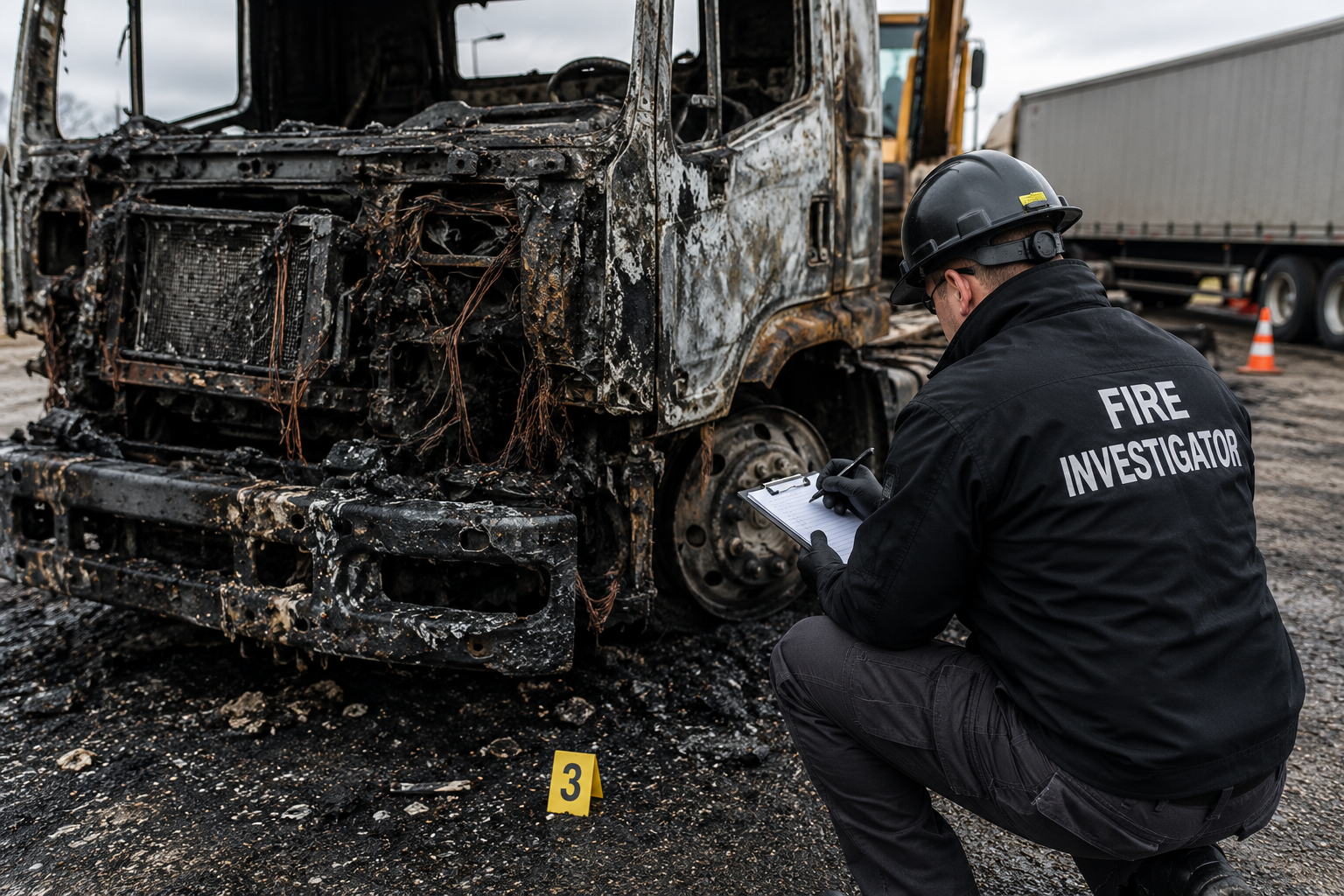
Vehicle fires can occur suddenly and often result in significant property damage, business interruption, insurance claims, and legal disputes. Determining exactly how and why a fire started is critical for vehicle owners, insurers, fleet operators, manufacturers, and legal teams.
A professional vehicle fire investigation helps identify the origin and cause of the fire while preserving evidence that may be important for liability determination and insurance recovery.
Common Causes of Vehicle Fires
Vehicle fires can result from a variety of factors, including mechanical failures, electrical issues, collisions, and fuel system problems.
Some of the most common causes include:
- Electrical system failures
- Damaged wiring or short circuits
- Fuel system leaks
- Engine overheating
- Mechanical component failures
- Battery-related incidents
- Collision-related damage
- Improper repairs or modifications
- Heavy equipment malfunctions
In commercial fleets and industrial environments, vehicle and equipment fires can also involve hydraulic systems, combustible materials, heavy machinery components, and high-temperature operating conditions.
How Vehicle Fire Investigations Work
A forensic vehicle fire investigation begins with a systematic examination of the fire scene and damaged vehicle.
Investigators analyze:
- Fire patterns and burn indicators
- Vehicle components and systems
- Electrical wiring and circuitry
- Fuel and hydraulic systems
- Maintenance and repair records
- Witness statements
- Photographic and physical evidence
The objective is to determine both the area of origin and the most probable cause of the fire using accepted forensic methodologies and fire investigation standards.
Heavy Equipment Fire Investigations
Heavy equipment fires present unique challenges due to the size and complexity of industrial machinery.
Excavators, loaders, haul trucks, forestry equipment, agricultural machinery, and other industrial vehicles often operate in demanding environments where heat, vibration, fuel systems, hydraulic fluids, and electrical components interact continuously.
A heavy equipment fire investigation may involve:
- Hydraulic system analysis
- Mechanical failure assessment
- Electrical system evaluation
- Operational history review
- Equipment maintenance records
- Fire origin and cause determination
These investigations often support insurance claims, litigation, equipment manufacturers, fleet operators, and industrial organizations.
Electric Vehicle Fire Investigations
As electric vehicles become more common, investigators are increasingly called upon to evaluate fires involving battery-powered systems.
EV fire investigations may involve:
- Battery system analysis
- Charging system evaluation
- Electrical component failures
- Thermal runaway assessments
- Post-collision fire analysis
Because electric vehicle systems differ significantly from conventional gasoline and diesel vehicles, specialized forensic expertise is often required to determine the origin and cause of these incidents.
Determining Liability After a Vehicle Fire
One of the most important objectives of a forensic vehicle fire investigation is determining whether a responsible party contributed to the loss.
Potential liability may involve:
- Manufacturing defects
- Component failures
- Maintenance deficiencies
- Improper repairs
- Operator error
- Third-party negligence
Investigators document findings through detailed reporting, evidence analysis, and expert opinions that may be used by insurers, legal teams, and courts.
Why Timely Investigation Matters
Critical evidence can be lost quickly after a vehicle fire. Salvage operations, weather exposure, repairs, or disposal can significantly affect the ability to determine origin and cause.
Early involvement of a qualified vehicle fire investigator helps preserve evidence and improves the likelihood of reaching reliable conclusions.
At Fire Forensic, we provide vehicle fire investigation, heavy equipment fire investigation, and forensic fire analysis services throughout Western Canada. Our investigations support insurers, fleet operators, legal professionals, municipalities, businesses, and private clients seeking objective, evidence-based answers following a fire loss.